Oh, Look, There's Nana's Painting
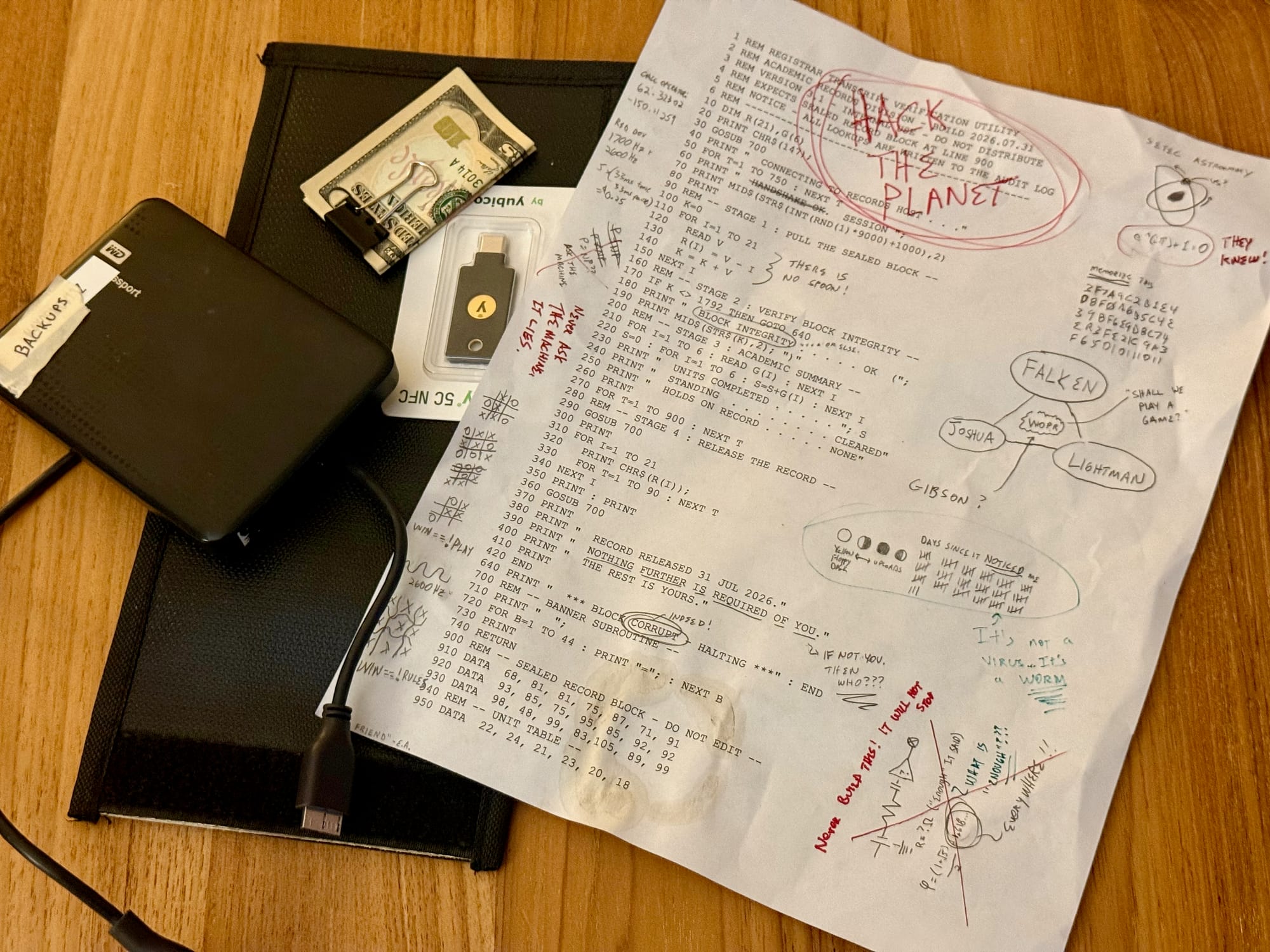
Told her to start w/ WarGames (1983), Hackers (1995), Sneakers (1992) then Primer (2004) and just binge all of Mr. Robot. Don't worry - the list is something like 400 entries long and includes a mix of documentaries, fiction, and videos/lectures from CONS all around the world.
A chatbot looked at a $100 thrift-store painting and found a quarter of a million dollars.
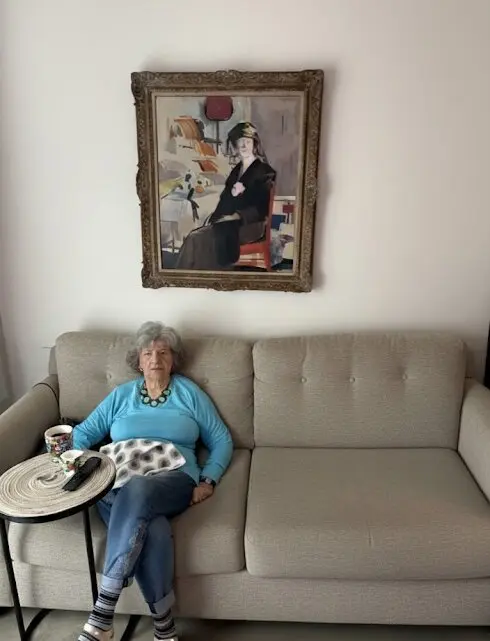
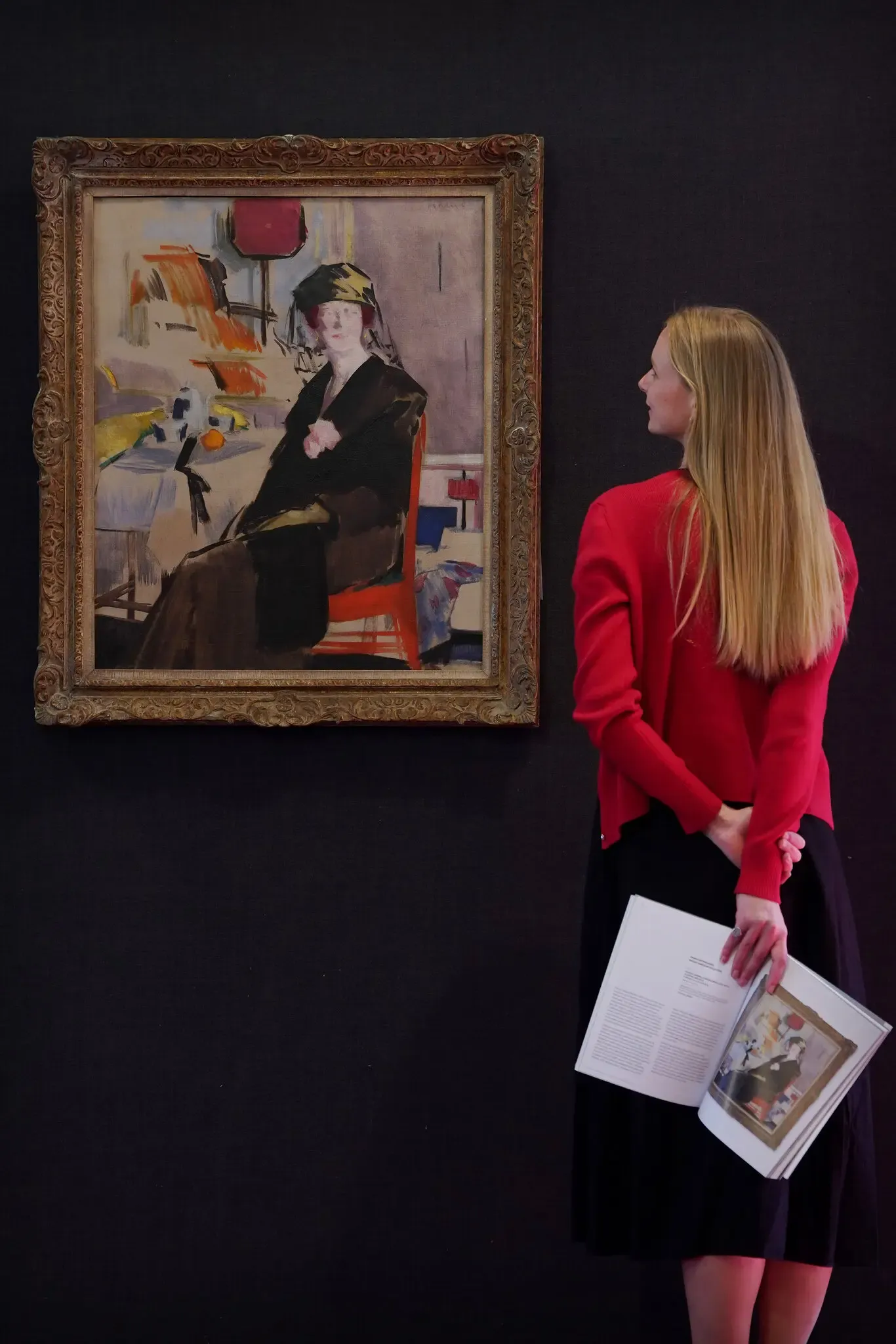
Sixty years of being loved, one minute of being labeled.(via NYTimes)
In 1966, Helene Plotkin paid less than $100 at a White Plains thrift store for a painting of a woman in black, because she loved the color and the brushwork. It hung on her wall for sixty years.
Last December her son photographed it and asked Gemini what it could tell him.
The chatbot's answer: "Your mother didn't just find a 'Cadell,' she found a large-scale, 1920s studio portrait of his primary muse, painted in his most famous Edinburgh studio."
It told him to check the back of the canvas, where an auction marking and a stamp were waiting, and it recommended two specialists at Lyon & Turnbull in Edinburgh by name.
The humans confirmed the painter, F.C.B. Cadell of the Scottish Colorists, corrected the muse (Gemini named the wrong model, and a turban borrowed from another Cadell portrait gave away the right one), and sold the painting this summer for £189,200 with fees, roughly $254,000. Christie's had sold the same canvas for £21 in 1966, months before it surfaced in a New York thrift store.
The appraiser admitted she could have made the attribution herself. The expertise existed the whole time. What stopped the family was the activation energy: hauling a painting to an auction house to maybe be turned away. Sixty years of mild curiosity never cleared that bar. A photo and a question to an AI cleared it in a minute.
Somebody built a blogging platform for handwriting.
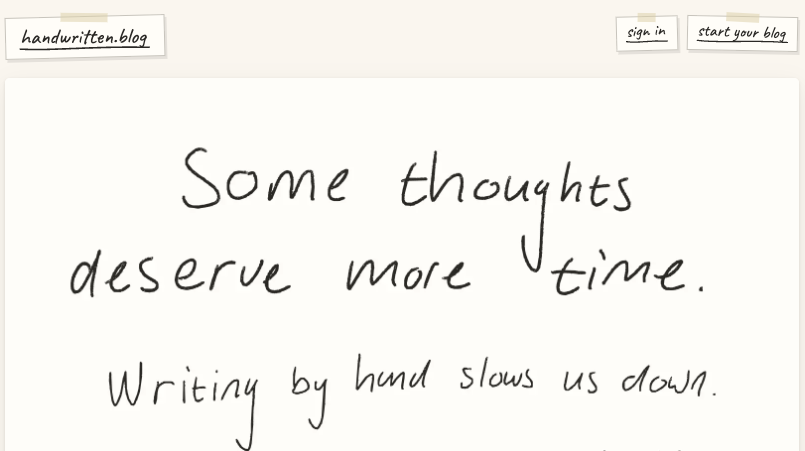
Handwritten.blog does what the name promises. You put ink on paper, photograph the result, and the post is the picture, wobbles included, with a transcript attached so search can follow along. The manifesto fits on an index card: "No algorithms or feeds or likes. Just your pages, published as you wrote them." It is the work of one developer in the Netherlands, who started building after a fellow blogger got curious about how to draw a hyperlink by hand.
The pitch: "In a world where machines are doing more and more of our thinking, we need a place to slow down."
Slow is half of it. The other half: typed prose has never been easier to fake, and a machine can now write in anybody's voice, but it cannot push your particular pen through your particular loops at your kitchen table.
The appraiser who authenticated the thrift-store Cadell said the painter "says 'I am Cadell' over and over" in the brushwork. A handwritten page makes the same declaration.
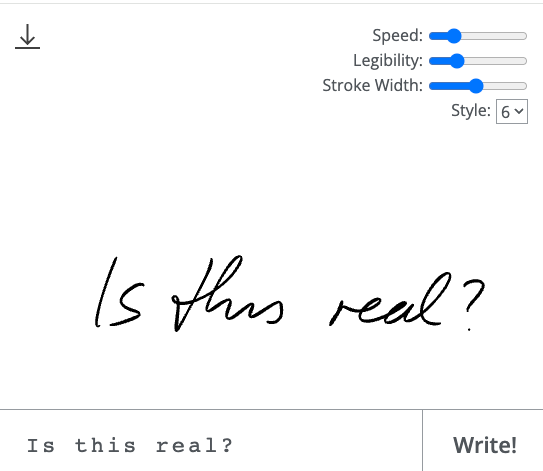
Of course, AI can replicate handwriting, so even this is an open question.
Google Earth generated fictional landmarks for a day.
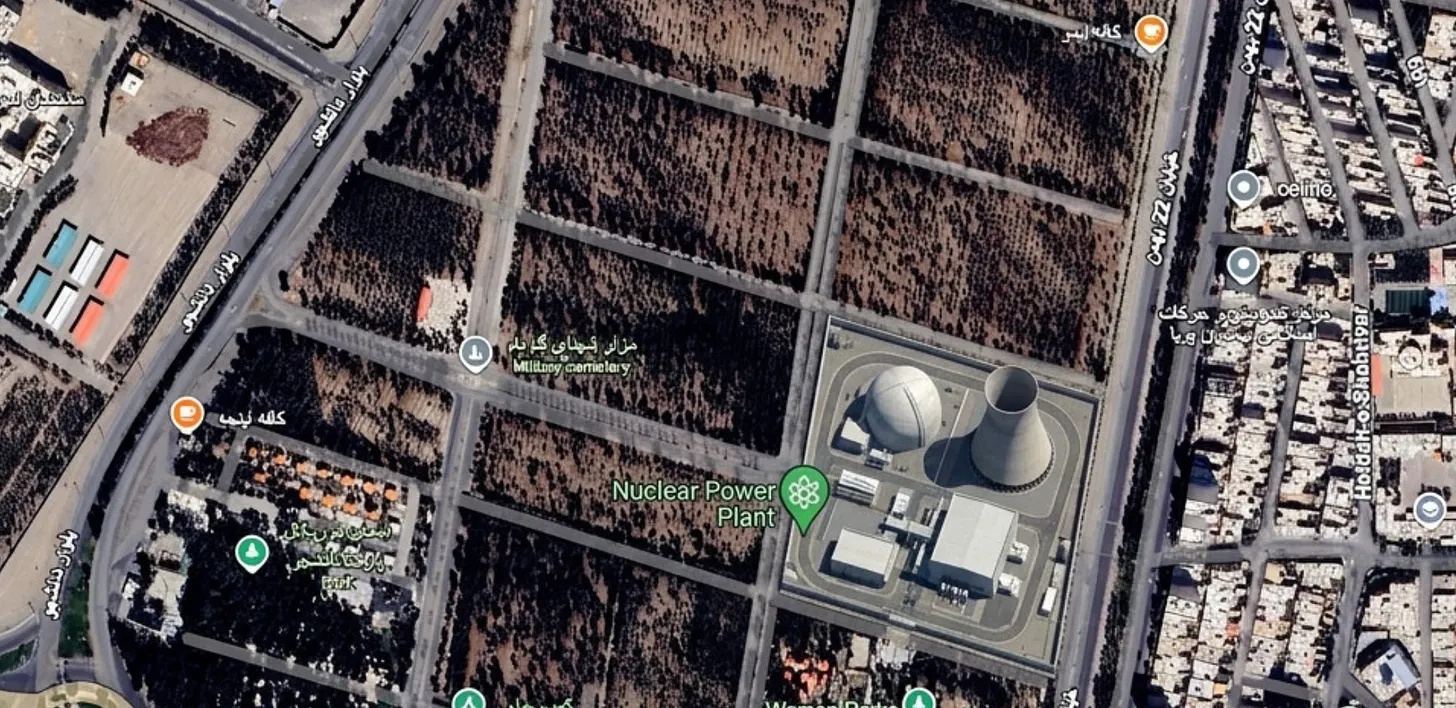
Google put an image generator inside Google Earth and pitched it as a way to visualize historical sites and real estate projects. Investigator Henk van Ess used it to generate "refugees near the Mexican border" and a bomb crater beside a hospital in Gaza. Satellite imagery is the closest thing the internet has to a notarized document: a literal snapshot of reality on Earth. It is the layer we zoom to when we want to know what actually happened.
Now it had a generate AI image button.
Google's defense was a label: every synthetic image carries a SynthID watermark, and if you are unsure you can ask Gemini whether a picture is fake. But researchers have already reverse-engineered the watermark, and van Ess fooled a commercial AI detector with an altered Google Earth video. His advice for checking a suspicious flyover: compare it against Sentinel-2 or Landsat, and confirm which satellite took it, and when. The ground truth now needs an alibi.
Then Google pulled the feature, one day after its global launch, promising to rebuild with stronger guardrails. Twenty-four hours from demo to takedown is as clean a measurement as we will get of the distance between a toy for reimagining places and a machine for manufacturing evidence.
The Magnificent Seven is a label that keeps trading anyway.
After the seven big tech stocks shed more than $2 trillion of market value in June, a Financial Times columnist made the case that the nickname itself was the product. The seven were always a ragbag spanning software, online retail, chips, and cars, and buying "the Mag 7" meant buying a story instead of reading seven balance sheets.
A good nickname is momentum in word form.
Before this it was the FAANGs. In the 1960s it was the Nifty Fifty, the "one-decision" stocks you could buy once and hold forever: Avon, Polaroid, Eastman Kodak, Xerox... nifty right up until the 1970s, when several of them went bust.
Index funds automate the effect now, since cap-weighted trackers are forced buyers of whatever is already biggest. A name that lets you skip the reading is how prices part company with the things underneath. You know, trivial stuff, like a product normal people actually value or can at least describe.
Citigroup's analysts have retired the name. In the same breath, the market minted a fresh one: MANGOS (Meta, Anthropic, Nvidia, Google, OpenAI and SpaceX).
The label is dead, long live the label.
Helene Plotkin loved her painting for sixty years without a name on it. She is giving the sale money to her sons, and she has one hope for the buyer: hang it somewhere her grandchildren might walk past and say, "Oh, look, there's Nana's painting." The money loved the label. But the thing was already loved.
/ David
Reading: MIT's summer 2026 reading list, forty-some books published by MIT people in the past year. I'm starting with Birds Up Close by Lorna Gibson, a materials engineer on how an egg gets built and how a woodpecker survives its own jackhammering.
Listening: "A Horse with No Name," America, 1972. Fifty-four years of being loved without an attribution.