String Too Short to Be Saved
“String too short to be saved.” (the label on a box in a New England attic)
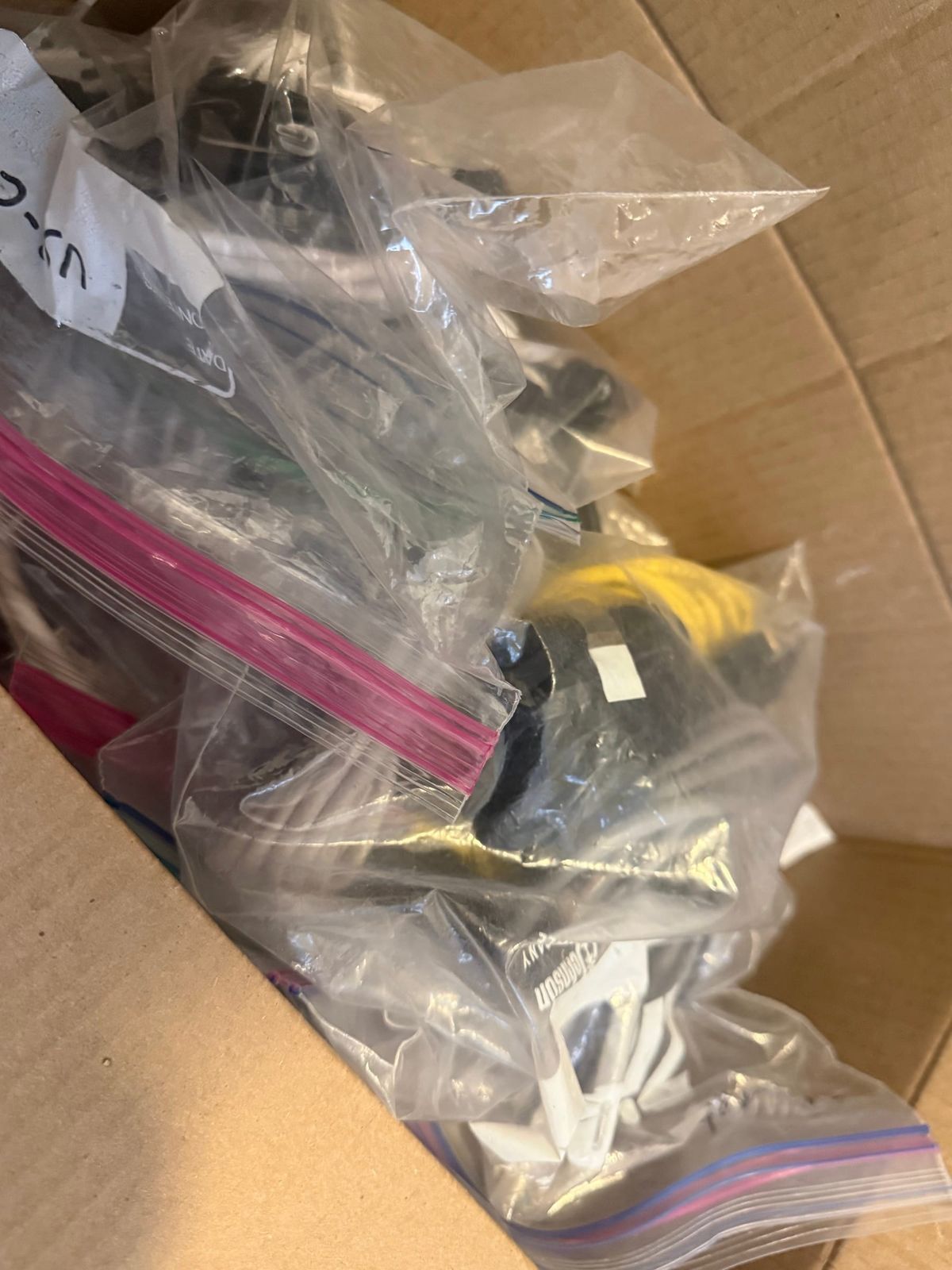
A box of cables
I'm still clearing out my office. One box holds a viper's nest of charging cables, of which I can identify roughly 3. The others live in the box "just in case" (in case of what, the box doesn't say).
There's an old New England story about a man cleaning the attic of an old house who finds a box full of tiny pieces of string. The lid carries an inscription in an old hand: "String too short to be saved." Donald Hall borrowed the label as the title of his 1961 memoir about summers on his grandparents' farm in New Hampshire.
I am in no position to judge.
The European Union, which seems to exist to regulate anything, keeps a number for boxes like mine. By an estimate the European Parliament cites, discarded and unused chargers add up to about 11,000 metric tons of e-waste a year. It made USB-C mandatory on phones at the end of 2024 and on laptops this April, and it lets stores sell devices without a charger in the box. The Commission estimates the second part will cut that by 980 metric tons a year. I don't know how many tons my unused USB cable box holds, but the weight on my shoulders feels enormous.
Knowledge that never goes offline
Last week was a rough one for just about anything involving a computer. Microsoft's email went down from Thursday into Friday, the FAA stopped flights across the United States for four hours, Chase transactions slowed, and Apple Pay and iCloud stumbled.
The official explanations all came down to: relax. Microsoft called its outage "a technical issue not related to cyber or AI / agents." The Director of National Intelligence said "This is not a cyberattack." So, apparently, nobody attacked anything and it all fell over by itself at once, which I found less comforting than I think I was supposed to.
I've been thinking about prepping since. The digital kind (no beans, no bunker), where your files, maps and reference books keep working after the network stops.
Project N.O.M.A.D. is free, open-source software that turns a computer you already own into an offline library. I haven't tried it, though anyone with a box of "just in case" cables has to be the target audience. The install lets you load an offline copy of Wikipedia, maps, Khan Academy courses and an optional AI assistant that runs on the machine itself. Let's set aside the fact that this presumes I'd have stable electricity to run this doomsday scenario (gasoline-powered generators do exist... though the tin foil hat I have in one of my junk drawers reminds me what gas costs these days). I'd argue that "making sure I can go down Wikipedia rabbit holes" in a post-apocalyptic world might not be as important as, say, making sure I had access to potable water. But at least I could read about doomsday scenarios in my bunker.
Estonia is doing its own digital prepping for a whole government. Under a 2017 agreement, it keeps state-owned servers in a Luxembourg data center, holding backups of government data and able to run its most critical services. Estonia calls it a data embassy, and it has the same immunity as a real one, so somewhere in Luxembourg there are servers with better legal protection than I have.
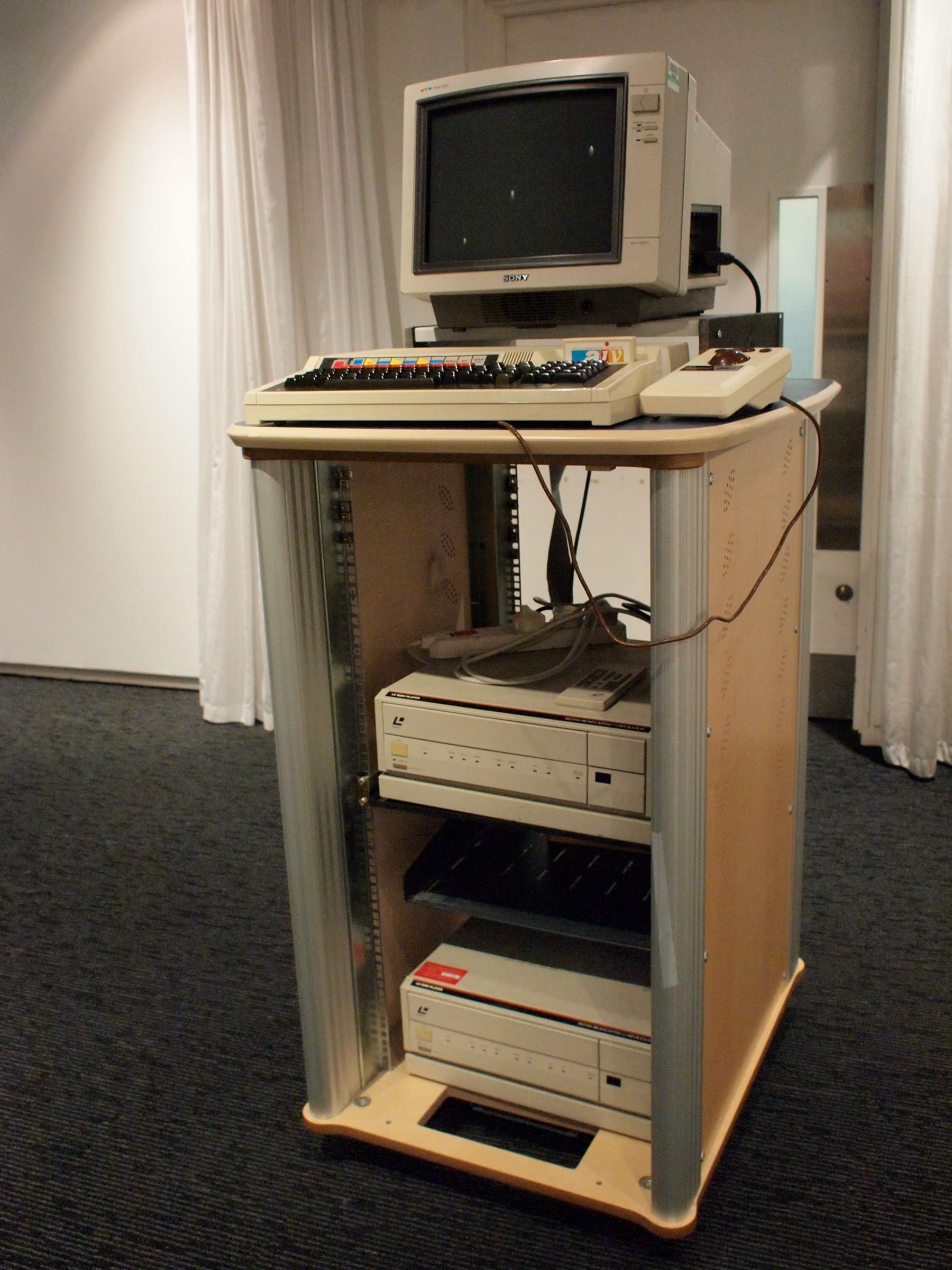
The catch is that offline goes bad too. In 1986 the BBC finished its Domesday Project, a digital portrait of Britain with around a million contributors and a £2.5 million budget, stored on laserdiscs. In 2002 the Observer ran this headline: "Digital Domesday Book lasts 15 years not 1000." The discs needed one particular BBC computer and one particular laserdisc player, few of either were left, and the project was nearly lost before a rescue team rebuilt it in emulation. One of the rescuers, Paul Wheatley, told the paper: "We're lucky Shakespeare didn't write on an old PC." Let's hope they kept the right charging cord in their cable pile.
The BBC built it for the 900th anniversary of the original Domesday Book, William the Conqueror's survey of England from 1086. That one was written on sheepskin, and you can still read it.

She should have a waist
The Wall Street Journal ran a piece last week on vets and pet owners at each other's throats. It opens with the writer's own dog getting the weight talk ("She should have a waist.") and moves on to rising prices, staff shortages, owners secretly filming appointments, and a $395 training package for vets called "Charming the Angry Client."
My puppy, Kiko, is ravenous for treats and for shoes. He's a cavapoo, so unless we are referring to teddy bears mixed with bitey tornados this does not apply to him. He'll happily consume leaves, rocks, and (I wish I was kidding) desiccated rat carcasses. I'm not worried about his weight at the moment.
About one in four Labrador retrievers is thought to carry a deletion in a gene called POMC. In 2024 the Cambridge researchers reported in Science Advances that dogs with the mutation burn around 25 percent fewer calories at rest and are hungrier between meals. The hunger test (and I would like this job) was a sausage in a clear box.
Then there are the assistance dogs. In the 2016 study that found the deletion, it showed up in 76 percent of the 81 assistance Labradors tested. The researchers think selection may explain it: those programs have long trained with food rewards, and a dog that works hard for a treat may be the dog that gets picked for breeding. They also said it could be a quirk of the data, which is how a scientist says "just in case."
So a Lab that acts starved an hour after dinner may not be faking. Kiko has no such excuse.

/ David
Listening: "No Strings Attached," *NSYNC, 2000. The EU is working on it.