Skating on a Little Lake of Ink
Signals Worth Tracking
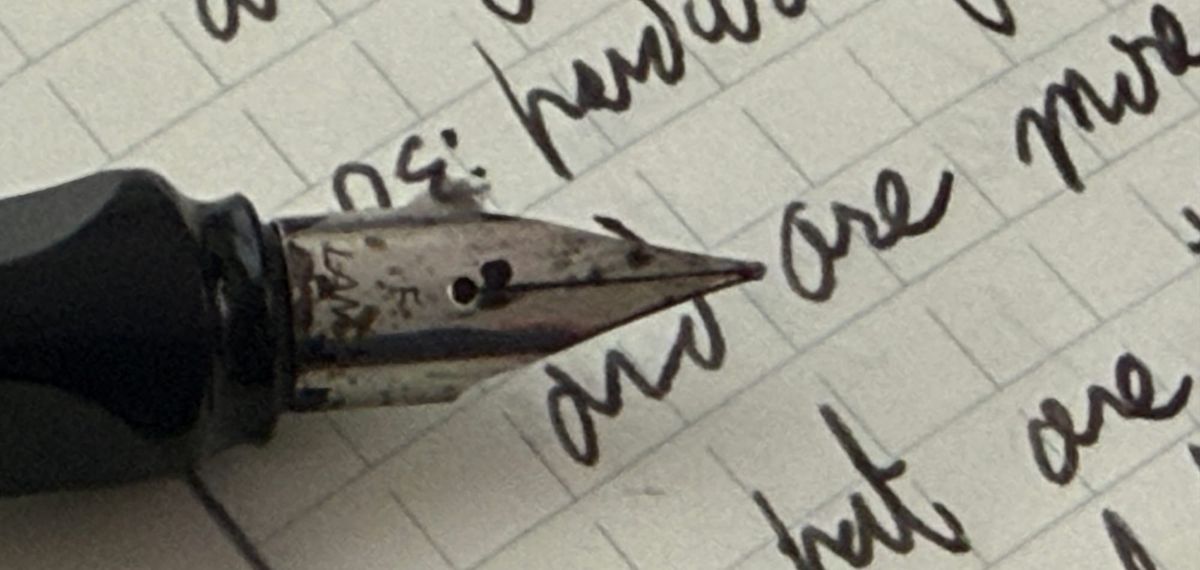
The man who invented the metaverse writes with a fountain pen.
Neal Stephenson coined the metaverse in 1992, and he has written nearly every novel since 2001 in longhand. His own account of the practice is rich.
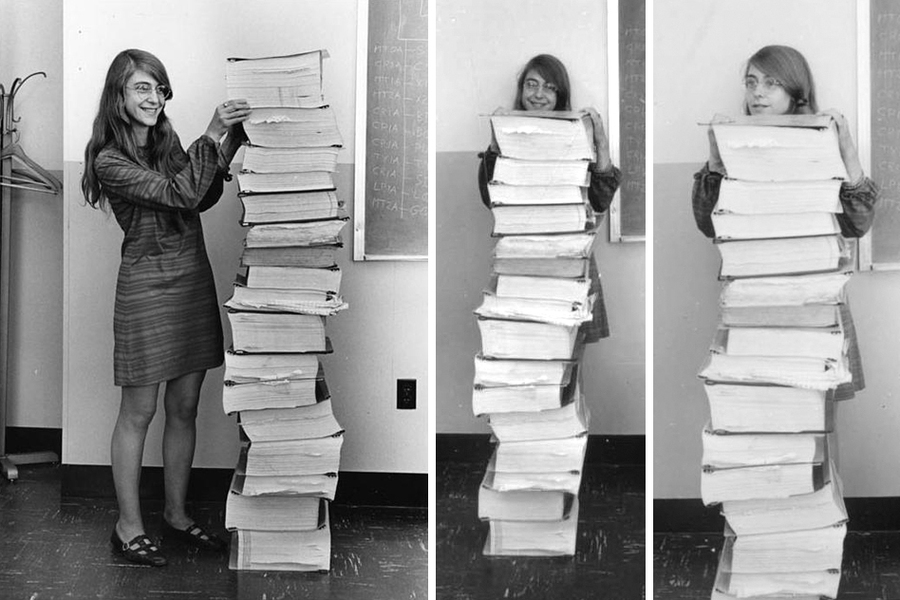
The handwritten manuscript for the Baroque Cycle stood 42 inches tall.
(reminds me of that famous photo of Margaret Hamilton standing next to the Apollo Guidance Comptuer code).
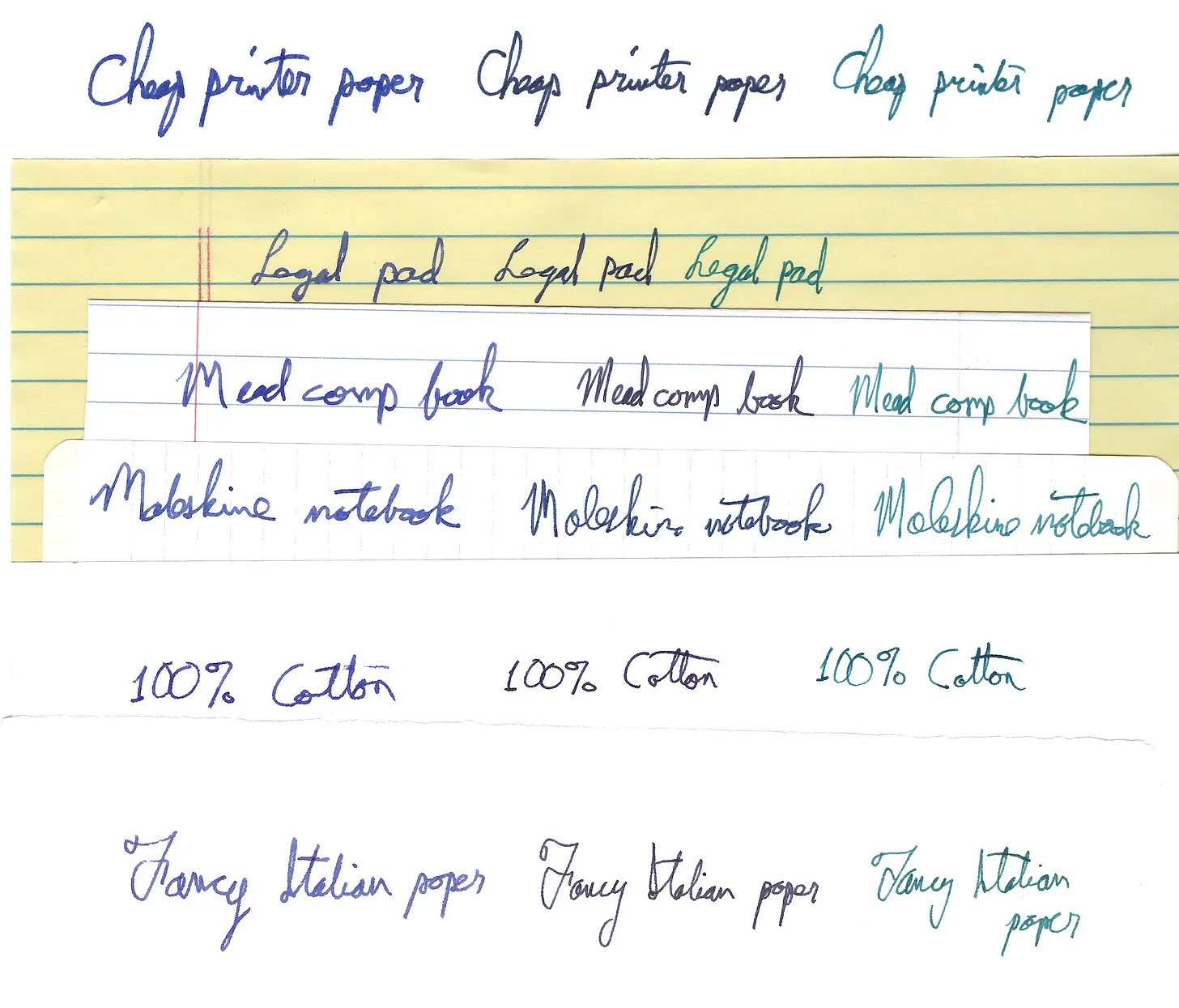
In 25 years of daily writing Stephensen says he has never had writer's cramp, and his explanation is pure materials science: pencils and ballpoints need force to make a mark, while a fountain pen nib is "basically skating on the little lake of ink that it has just laid down."
His other rules include: write cursive, don't worry about inkblots, and never bother conserving paper. He also rejects the iPad stylus, since hard plastic on glass has no tooth, the faint friction a hand steers by.
Indeed, there is soul in a pen stroke that a perfectly rendered font behind a glass screen won't replicate.
And if a fountain pen sounds precious, his budget pick is a $20 ten-pack of Pilot G-2s, which he says gets you 80 percent of the way there.
Birdsong as source of calm and drama.
University campus counseling centers are underwater, with roughly 60 percent of college students reporting mental health struggles by 2020, so researchers at NC State went looking for something that works, costs nothing, and was easily accessible.
They handed 106 students a camp chair and noise-cancelling headphones and sent them to two spots on campus: a replanted stretch of woods along a creek and the concrete plaza outside the student union.
At each spot the students sat for ten minutes hearing either birdsong (Carolina wren, blue-grey gnatcatcher, white-eyed vireo) or traffic recorded near a Paris intersection. Forest plus birdsong beat every other combination on every measure the team tracked, and concrete plus traffic lost every category.
Ten minutes, a chair, no binoculars, no technique. "They just sat and listened," the write-up notes. An entire industry is engineering calm into apps, and Mother Nature had it right, all along.
You intuitively know that sitting in nature, listening to birds is the right kind of slowing down that makes a fountain pen more satisfying - intentional friction and anti-optimization.
But what happens when you turn the birdsong dial all the way to 11?
L and I watched the documentary LISTERS (free on YouTube), a documentary by two brothers who dove into the world of competitive birdwatching in an attempt to complete The Big Year Challenge: they would need to spot 700 bird species across the contiguous United States in a single year. With zero experience in birdwatching (though one of the brothers was a National Geographic photographer, so the bird images are amazing), this was quite the undertaking.
The story turned out to have surprisingly little to do with birds. Of course, the activity gives a reason to be outdoors, and the filmmakers ran into genuine nature lovers who clearly derived calm and joy in their bird quests.
The drama and gossip among the film's titular "Lister" community was anything but calm.
When you add a cataloging challenge, with a map, working towards limited resources, rankings, competition, gatekeepers and moderators. This outdoor meditation starts to turns into some kind of game.
The birds are the scoring system, like geocaches that constantly migrate. It motivates people out the door. And unsurprisingly, it's the apps and online communities that reintroduced the anxiety.
The Merlin app from CornellLab is quite a technolgical marvel. Way before AI was everywhere, it was listening to the sonic waves of birds using phones and helping enthusiasts identify the birds they were hearing. People wandering through nature can participate in citizen science by collecting their observations.
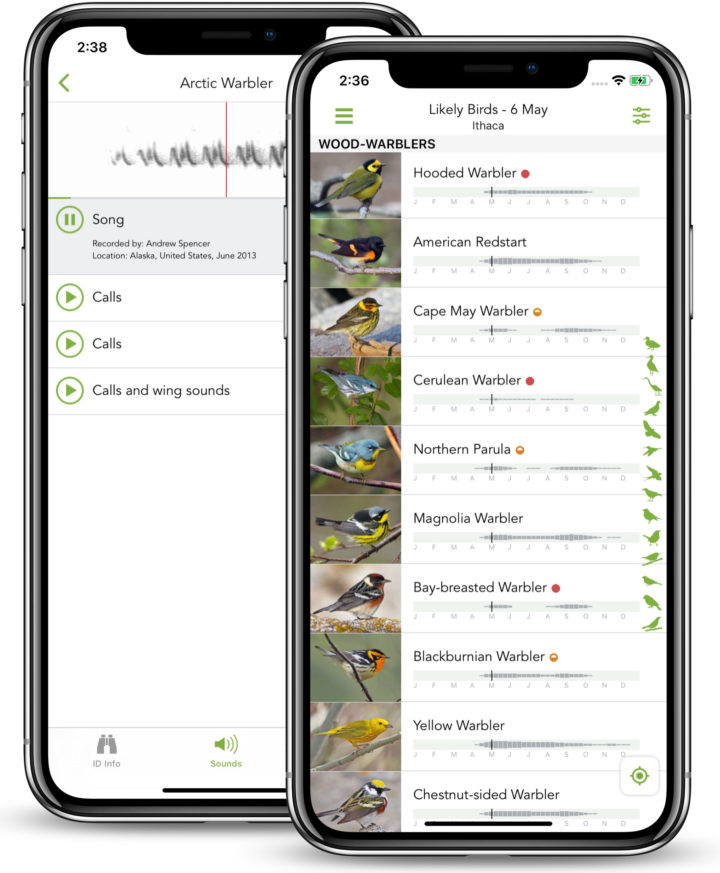
However, at the more intense side birding, apps like CornellLabs eBird and iGoTerra set up rival taxonomies and world records stacked on top of the simple act of going outside. This leads to the weird internet behavior like individuals attempting to game the system and the obsessive forensics that people use to validate claims.
In the infamous WATAGate controversy, a user posted what many thought was a fake photo of a very rare Wandering Tattler (abbreviated as WATA) to a Facebook group as proof of a sighting in Quebec.
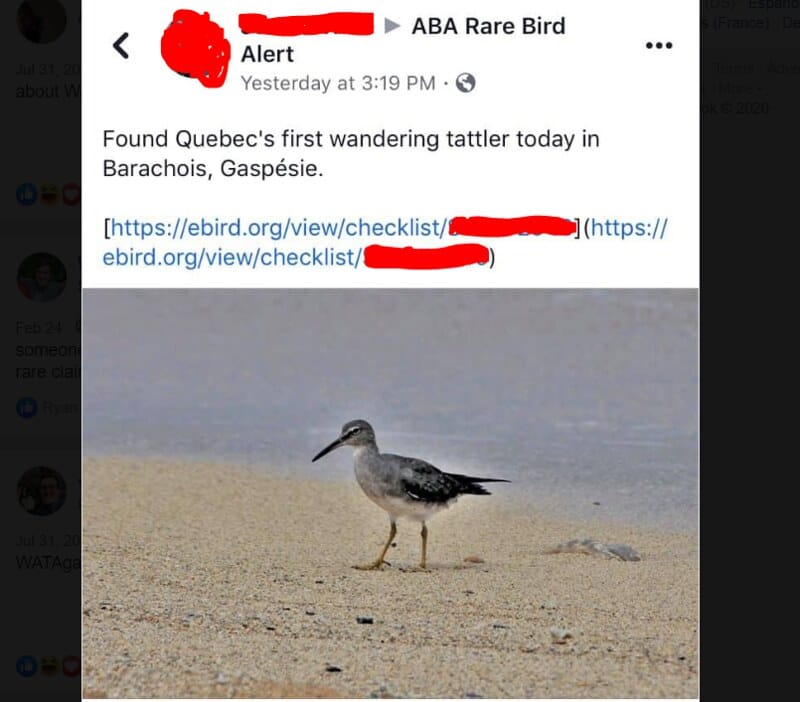
The community immediately noticed that the bird's plumage was incorrect for the current season, the photographs metadata showed it was taken in Hawaii on a different date than claimed, and the person's own story seemed way too implausible (only had one photo after spending 5 hours in the field... for a bird this rare, most birders would have taken dozens or hundreds of photos).
Here, the wisdom of the crowds won out. It begs the question - what was actually won here? The fraudster was trying to accomplish something (fame? validation? trolling?) The community ferrated out an interloper and kept the gates closed for another day. But did it get more people outside enjoying nature?
In February 2024 two birders claimed the 10,000-species record on the same day. Peter Kaestner had been birding since he was four years old. Jason Mann surfaced from nowhere, having uploaded a backlog of more than 9,000 species to a now-defunct site over a few months, and nobody could referee it.
eBird moderates sightings because scientists use the data, while iGoTerra runs on what its vice president calls "a gentlemen's agreement." One birder's summary: "Either this guy is the luckiest birder alive, having rediscovered several lost species, or his list is not to be trusted."
In the meantime, the birds just keep singing.
Somebody is keeping a ledger of software's small mercies.
Unsung is a blog by Marcin Wichary about the parts of software nobody thanks anyone for. Software ink blots like the timing window between click-to-rename and double-click-to-open. The fifty misaligned text boxes somebody fixed instead of shipping a feature.
For example, he relates a 1984 story from the original Mac team: weeks after launch, every demo Mac in every computer store had a floppy disk renamed to keyboard garbage. The Finder selected the disk on startup, so when someone typed something on the keyboard, the disk was renamed whatever was selected.
Every curious stranger who walked up and mashed the keys signed the machine without knowing it.
The solution persists to this day: click once to select an item, and then you have to click it a second time to activate the renaming mode.
Forty years of interface conventions exist because of moments like that, and Unsung reads like their field guide. It has the same effect on me as watching a carpenter plane a door edge. I didn't know I could find it satisfying, and now I want to go fix something small... or celebrate the bugs, Kintsugi-style

/ David
Listening: "Blackbird," The Beatles, 1968. That is a real blackbird on the tape, and it has held its own next to McCartney for 58 years without once being asked to verify a sighting.